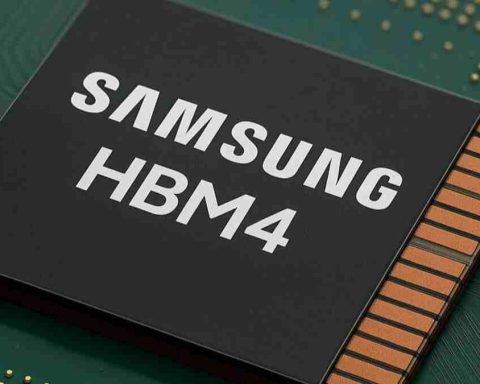

The packaging stage of production is increasingly being seen as critical for driving advances in chip technology, with the U.S. kicking off a $3 billion program to boost its packaging capabilities this week. As a result, companies like Japan’s Resonance are putting more emphasis on research and development that focuses on this aspect of chip creation.
Resonance (4004.T), the Japanese maker of silicon carbide (SiC) wafers, said on Wednesday it would set up a research and development center for advanced semiconductor packaging and materials in Silicon Valley. The facility will help Resonac closely monitor trends in the global market and foster international collaboration in the race to develop next-generation chips.
As the E.V. (electric vehicle) market grows, car manufacturers and powertrain suppliers rush to develop components that improve fuel efficiency and prevent overheating from long driving times. Power modules, which convert electrical energy into mechanical power that drives motors, are essential. Traditionally, the evaluation and simulation of power modules have been the responsibility of automobile manufacturers, powertrain suppliers, and power semiconductor manufacturers. However, this has led to delays in the development of E.V.s. Resonance has established the PMiC to address these issues by accelerating the evaluation and simulation of power modules from a material perspective.
PMiC has already started to work with automobile manufacturers and power semiconductor companies. The company builds and evaluates prototypes of power modules, which customers then use for their own evaluation and design activities. In addition, Resonac provides a range of services to support the entire power module development process, including supply chain management and resolving equipment installation issues.
Using its proprietary evaluation tools and simulation systems, the PMiC will make it possible to rapidly develop the necessary composite materials to reduce energy loss in power modules by identifying their chemical structural formulas. It also makes it possible to swiftly identify the best combination of materials to meet customer requirements and improve their performance.
The PMiC will also research and develop SiC epi-wafers, a key component of E.V. power semiconductors. This will help to ensure that the E.V.s produced by its customers are of high quality and meet performance expectations. In addition, the company will work with its customers to optimize the SiC epi-wafers, including developing a range of supporting technologies.
Resonance, which accounts for about 25% of the world market share for SiC epi-wafers, aims to build a business that contributes to the spread of E.V.s by reducing energy consumption and increasing driving distance. In September 2022, the company began shipping samples of 200mm SiC epi-wafers that are expected to be used for E.V.s.
Several case studies are examined, including an American start-up company that forged a strategic alliance with a Japanese manufacturer to take a leading position in workstations and a Japanese electronics manufacturer that employs partnerships with U.S. start-ups as part of a diversification strategy. The article also explores the importance of weighing significant trade-offs when entering strategic alliances with foreign firms.