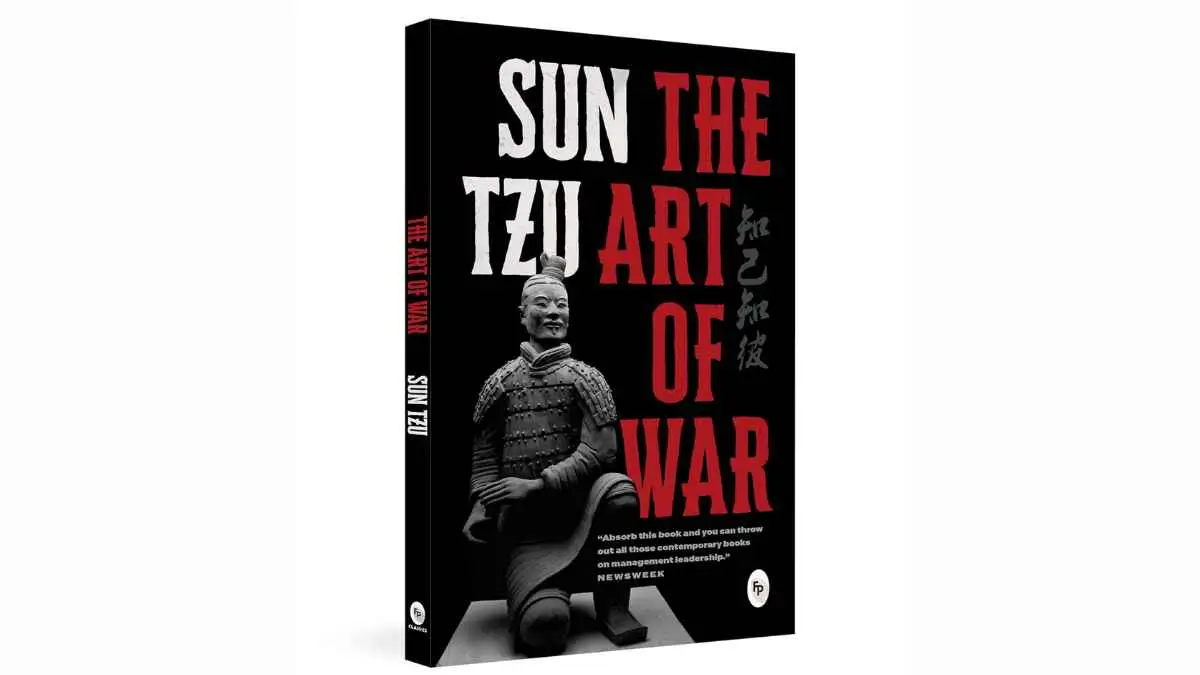
The Art of warfare, also known as Sunzi bingfa or simply Bingfa, is a Chinese treatise that has traditionally been regarded as the work of the Chinese military stratgist Sun Tzu (also known as Sunzi or Sun Wu). For its influence and importance, the text is probably one of the greatest strategic warfare manuals in history. This small book written more than 2,000 years ago, comprises about 6,000 characters (about 15,000 words in the English version), and it continues to be a popular subject among military commanders as well as businessmen politicians athletes, and everyone who is interested in competitive strategy.
Historical Context and Authorship
It first appeared in a very disturbed and difficult time in ancient China. In general, it is the Records of the Grand Historian written by Sima Qian (c.91 BCE) that most historians cite to support the traditional account which locates Sun Tzu during the later phase of the Spring and Autumn period (approximately 770-476 BCE). He is supposed to have come from Wei (now Shaanxi), but later on became the general of a small but ambitious kingdom of Wu which had been defeated by Chu who was a very strong power of that time. The scholars today don’t take it for granted that these are historical facts. Some have even argued that either the writing of the text or at least its final form was made to suit the needs of the early Warring States period (475, 221 BCE), where there was a lot of interstate conflict among competing Chinese territories.
Whether a specific Sun Tzu was the actual author of The Art of War, or the text evolved over time as a compilation of different contributions, is something that still remains hotly debated. The evidence provided by Archaeological Excavations is quite compelling: there were found fragments of bamboo slips that contain texts closely matching the one we have in hand now which were retrieved from a tomb at Yinqueshan (a place in Shandong) which is dated to have been sealed from 134 to 118 BCE. A Sun Bin text has also been discovered, and he is traditionally recognized as being descendants of Sun Tzu.
The historical fact of this is secondary. The most important idea in this article is that it shows how deep Sun Tzu understood strategy and that this work is very likely because of having to face extended warfare. The Art of War presents the notion of war as being a calculated, rational endeavor, rather than a feat that can be won only by having valor or having heroic qualities.
Influence and Legacy
The Art of War became part of the Chinese literary canon and was a requirement for imperial officials. It made an impact on Japanese samurai as well as later great leaders like Napoleon who first encountered it through an 18th-century French translation of it by a Jesuit missionary. Mao Zedong and the modern military theorists also made use of The Art of War by applying its principles in guerrilla warfare and Chinese Civil War. The first English translations came out at the beginning of the 20th century, and Lionel Giles’s 1910 version stayed mainly influential.
Besides the battlefield, its teachings which include anticipating, deceiving, and the ability to adjust quickly on top of understanding your adversary have been used very widely in business negotiation sports, and personal development. Because of its aphoristic, practical style, that makes it easy to understand and quote again and again, people have been continuing to read it and selling it in very large quantities without distinction in culture.
Why It Endures
Different from many ancient martial textbooks which usually concentrate on weapon type or battlefield arrangement, Sun Tzu’s The Art of War concentrates on principles of strategy that are enduring, psychology, and calculation. It regards conflict as much of an intellectual and political struggle as a physical one. As we are living in the world of sophisticated geopolitical rivalries, economic competitions, and information wars, its main topics such as intelligence, making situation favorable for you before you engage, and achieving goals in the most efficient way still have their effect. Sun Tzu’s saying is still valid: the highest success is to win a battle before actually fighting.
For strategists, The Art of War is a must have. One does not have to get into arms combat or anything related to that for it to be very applicable and helpful to him or her.
About the Author
The great Sun Tzu (also known as Sunzi or Sun Wu), who is traditionally considered as the author of The Artof War, has left an indelible mark on the military world as a strategist of unparalleled caliber. Unfortunately, almost nothing about his biography has survived to the present. Per classical Chinese histories, mostly the Records of the Grand Historian by Sima Qian, he lived in the Spring and Autumn Period (approximately the 6th-5th centuries BCE). Sun Tzu was from the Kingdom of Qi it is further said, but later he became the King Helu of Wu, a great military and strategist, whose guidance brought victories in wars
In the world of academia in modern times it s a hot topic whether a person named Sun Tzu actually existed or whether the book has been the result of a collective effort of the authors of the Warring States Period (475-221 BCE). Yet whoever wrote the book it was a time of great conflicts between different kingdoms, and the ideas attributed to the ancient writer are quite consistent with real life experience from warfare.
Sun Tzu is a Chinese general and strategist, whose legendary reputation was basically established entirely through The Art of War a very short but powerful handbook, explaining the importance of intelligence deception adaptability, calculation, and above all, a desire to win victory by avoiding combat. His insights have formed the basis of military thought for two thousand years or longer, influencing also the strategy, politics, and management areas.