The defense ministry said the balloons were spotted on Wednesday after crossing a median line that separates the Taiwan Strait from mainland China. One of the balloons flew directly over the island. Another landed just north of Hsinchu city, home to a significant air force base, and the third balloon was spotted 88 km west of Magong in Penghu province.
The ministry emphasized that the Chinese government has not requested permission for its balloons to enter Taiwan’s airspace. It also said that the latest sightings are unrelated to its earlier report that two balloons crossed Taiwan’s airspace from China on Jan. 1.
Taiwan’s defense ministry began reporting daily activity of Chinese military aircraft in December, and last month, it started mentioning the discovery of Chinese balloons entering its territory. It has been unable to determine the purpose of the latest discoveries but said it would “handle” the situation depending on the threat level.
A former U.S. official familiar with the issue told Reuters that China’s use of high-altitude balloons is a common tactic for intelligence gathering. It allows the country to monitor radar signals, track vessels and satellites in high-altitude orbits, and even transmit data back to the ground.
Officials also believe the Chinese spy balloon that entered the U.S. this year may have used a communications system that allowed it to send “burst transmissions,” which are high-bandwidth data collections over short periods, the official said.
Analysts have also raised concerns about the balloon’s ability to collect information from the radio frequencies it broadcasted, including those used for emergency action messages, which are how top military leaders communicate with strategic forces around the world and can include guidance on response options in the event of a nuclear attack. The Pentagon says it has taken exhaustive steps to limit the balloon’s capabilities to collecting only essential data.
The United States and China have been at odds over their competing visions for the region, with tensions over Taiwan’s self-ruled status, China’s human rights record, and its growing military presence in the South China Sea. Biden has described China as America’s most consequential geopolitical challenge.
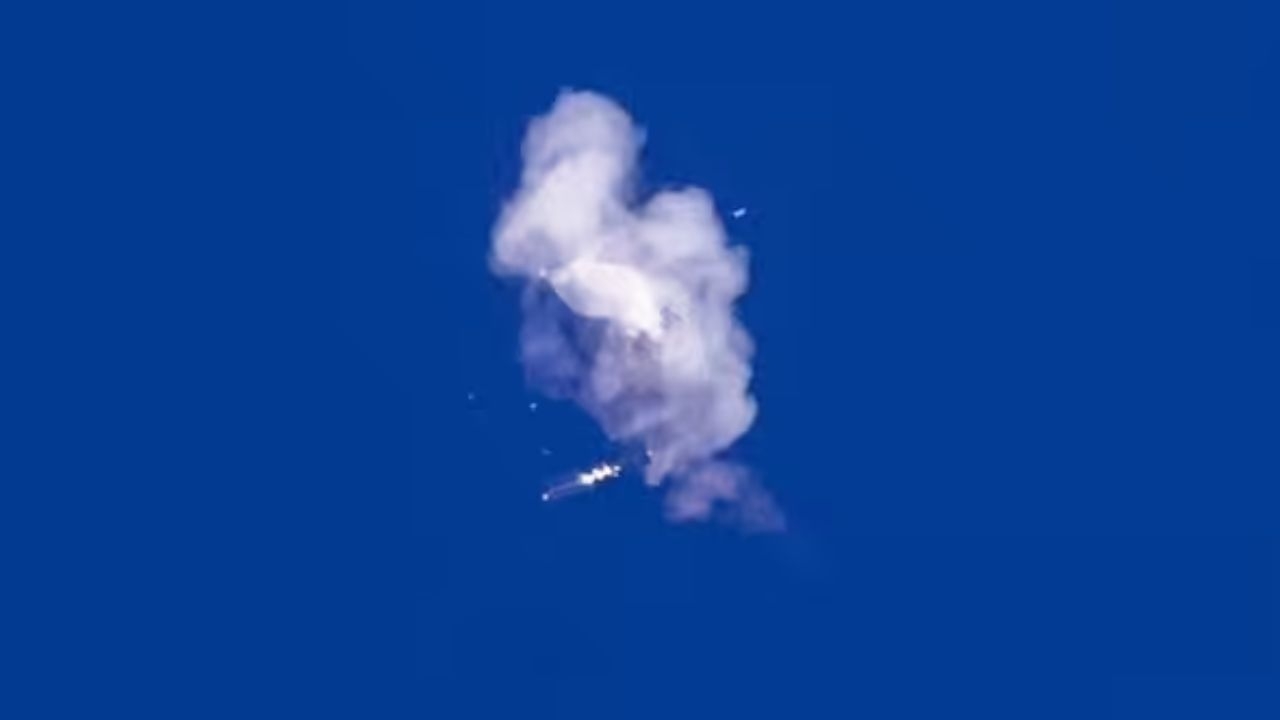
The potential for China to use balloons for spying became a global issue in February 2023 when the United States shot down what it said was a Chinese surveillance balloon that drifted astray and flew into U.S. airspace near Hawaii. The United States said it decided to shoot down the craft in the interest of national security, and China called the move an overreaction that violated its sovereignty. Since then, the Chinese government has increased efforts to develop new technology that could be used to spy on other countries. It has been developing new types of spy drones and uncrewed aerial vehicles. It has also made improvements to its satellite technology, a source said. The source did not want to be identified because he was not authorized to speak publicly.