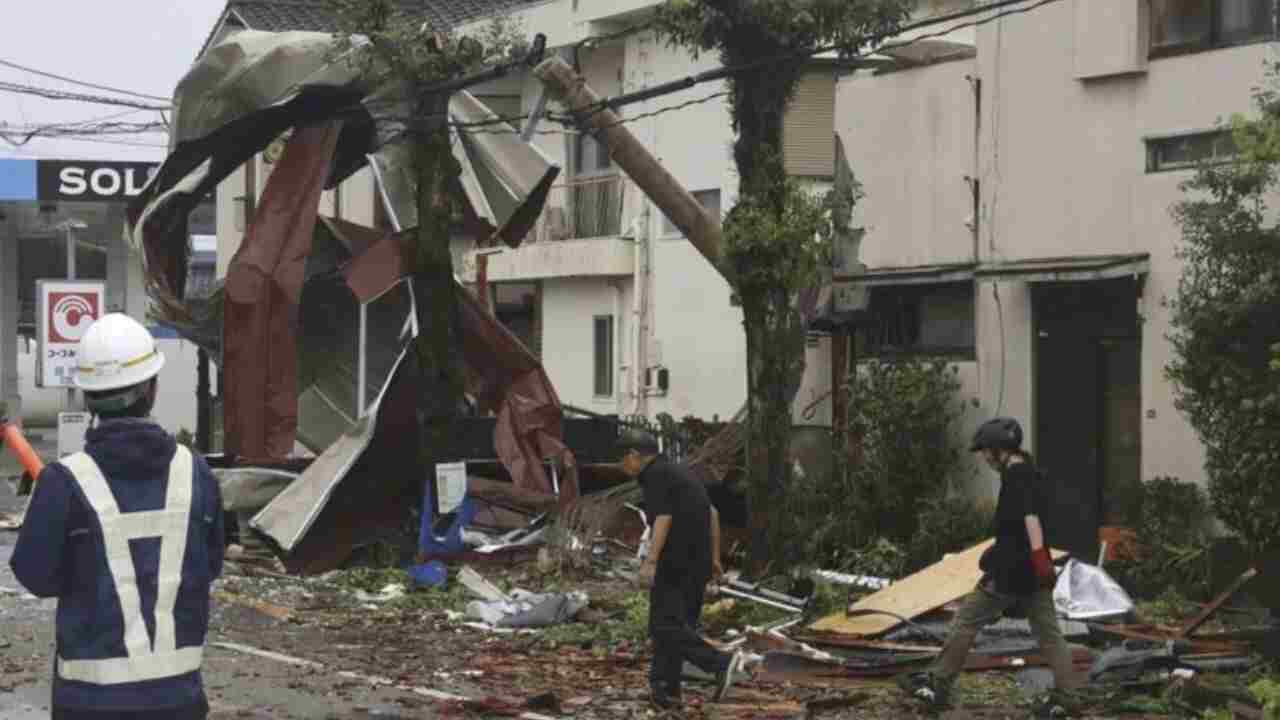
Tokyo, Japan – A powerful typhoon named Shanshan made landfall in southern Japan early Tuesday morning, bringing devastating winds, torrential rain, and widespread flooding. The storm has caused significant damage and resulted in multiple fatalities.
The typhoon, packing winds of up to 150 kilometers per hour (93 miles per hour), made landfall on the island of Kyushu, near Kagoshima. As it moved inland, it triggered landslides, flash floods, and severe coastal erosion. The storm’s impact was particularly severe in the southwestern prefectures of Kyushu and Shikoku.
Authorities have confirmed multiple deaths and injuries, but the exact number remains unclear as rescue efforts continue. Many people are still missing, and there are fears that the death toll may rise as more information becomes available.
The heavy storm has caused widespread flooding, inundating homes, businesses, and infrastructure. Rivers have overflowed their banks, leading to evacuations and road closures. The flooding has also disrupted transportation, with many train lines and highways closed due to damage.
Power outages have affected large areas of the country, leaving millions of people without electricity. The storm has also caused significant damage to crops and agricultural land, threatening food security.
The Japanese government has mobilized emergency services to respond to the disaster. Rescue teams are working around the clock to search for missing people and aid those affected by the typhoon. The military has also been deployed to assist in relief efforts.
As the typhoon continues to move across Japan, authorities warn of the potential for further damage and urge residents to remain vigilant. The storm is expected to bring heavy rain to the eastern part of the country in the coming days.
The devastation caused by Typhoon Shanshan is a stark reminder of nature’s destructive power. Climate change is increasing the frequency and intensity of extreme weather events, and the Japanese government is facing the challenge of adapting to a changing climate.