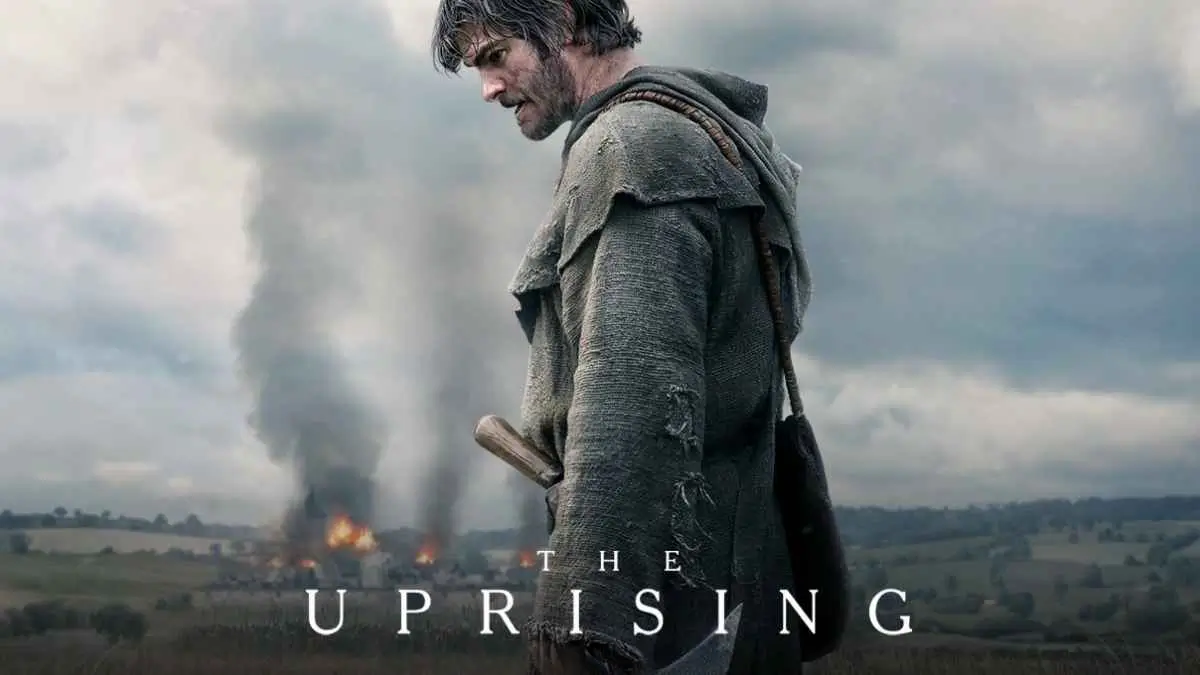
The 2026 Paul Greengrass release The Uprising, the director’s 1381 English Peasante Rebellion film with Andrew Garfield as the sad serf Plowman takes the viewer through the history-making revolt of the English people (2026). The movie takes place in a setting of a plague-wracked world where people have to contend with scythes, pitchforks and bloody clashes, the result of heavy taxation. The film runs at around 2 hours 7-9minutes and is rated R for violence and bloody pictures. In the U.S. it will be released in Focus Features September 10 and a UK date will follow in October.
Setting and the Plot
The story is focused on Plowman (Garfield), set in the grim aftermath of the Black Death, which killed off about half the population. His wife and children have already died of the plague, and he lives a miserable existence behind a plow in soggy marshland. Tensions erupt as royal councilors (advising the unstable, young 14-year-old King Richard II (Woody Norman)) impose yet another crushing tax on the peasantry to fund wars and protect the elite. Local uprising of plowmen against tax collectors and soldiers develops into wider unrest.
He joins with historical figures like the sharp former soldier Wat Tyler (Cosmo Jarvis) and the radical, fire-breathing priest John Ball (Jamie Bell), and with other traumatized commoners like Alyce (Thomasin McKenzie). The rebels march on London demanding justice from the boy king, whom they initially see as potentially fair but corrupted by bad advisors (including turns by Tom Hollander, Stephen Dillane, Katherine Waterston as the king’s mother and Jonny Lee Miller). The film oscillates between the swelling rage of the peasants and the panicked court, culminating in chaos as the sackings, confrontations and tragedy mount. In an epilog, a wink at folklore casts Plowman as a kind of Robin Hood a year later, though the movie mostly avoids naming the legend.
Greengrass (Bloody Sunday, United 93, Captain Phillips and the Bourne movies) brings his signature documentary-style handheld camerawork, frenzied editing and immersive intensity to the medieval setting. Pål Ulvik Rokseth’s cinematography adds real grit – filmed primarily in Bavaria and Franconia, Germany – with muddy landscapes, moldering skies, and satisfyingly bloody, rough-and-tumble battles with farm tools.
Strengths and Performances
Garfield is committed and haunted as the traumatized everyman thrust into leadership. Less a charismatic action hero than an exhausted survivor fueled by rage. The supporting turns lift the material: Bell is intense and magnetic as Ball, Jarvis lends brute shrewdness as Tyler, McKenzie conveys raw hysteria and trauma well, and Waterston’s cold, understated presence as the king’s mother is notable. The big scale extras and ensemble create a believable sense of a spreading conflagration.
The film’s greatest assets are its visceral energy, its moral complexity and its contemporary resonance. The themes of post-pandemic inequality, heavy taxation that favors the rich, corrupt advisors, populist rage and the ethics of rebellion feel pointed without being heavy-handed. The action sequences are immersive and brutal, heads on spikes, chaotic melee, providing the catharsis of the oppressed rising up, even as Greengrass refuses easy triumph. Critics have said “relentless forward momentum” has drawn comparisons to a grungier Braveheart at times and even Mad Max: Fury Road in its unstoppable revolt energy.
Weaknesses and Criticisms
The response has been varied. On Rotten Tomatoes, it currently stands in the low-to- mid 50s% (average approximately 6/10) after a couple of dozens of reviews have been submitted on the website; the site Metacritic scores it in the mid-50s, so giving it an indication that it is only mixed with some average marks. It is an audience CinemaScore B. The actors’ performances are praised and it is recognized as having some action and a very relevant setting but some others are critical of the overall sad tone monotony very simple dialogue and they do not quite get a picture from the use of the Greengrass’s shaky-cam style which some are very tired of or feel it makes things inappropriate for the period rather than helping explain them.
At times the story unfolds like a “well-acted blur of fits and starts” with little character development beyond archetypes and a slow pace some are comparing to a glum Game of Thrones episode. The late marketing pivot (briefly branding it The Uprising: The Rise of Robin Hood in the U.S.) was panned as misleading and anachronistic, as the film largely stands alone as a Peasants’ Revolt story and the epilogue’s folklore nod feels tacked-on to some, undercutting the tragic weight. Some reviewers felt Garfield’s Plowman lacked the ferocity or charisma of a central rebel figure and that the overall esthetic was more slog than stirring epic.
Conclusion
The Uprising (2026) is a movie that’s not afraid to get its hands dirty. An impressively made, intense historical actioner, it succeeds more as a sweaty, bloody portrait of populist fury than as polished prestige drama. Greengrass’s strengths in chaos and urgency are on full display, and the cast – especially Garfield, Bell, Jarvis, McKenzie and Waterston – grounds the muddy mayhem. Its relevance to modern inequality and post-crisis rage added bite.
Not for everyone: Stylistic exhaustion, little uplift, and a story that privileges sensation over deep character work or tidy historical lesson. If you’re a fan of Greengrass’s docu-realism, gritty period pieces or tales of the oppressed hitting back, this is a worthwhile (if imperfect) charge into the fray. Best on the big screen for the scale of the clashes. Recommended with tempered expectations. Rating: 6.5 out of 10