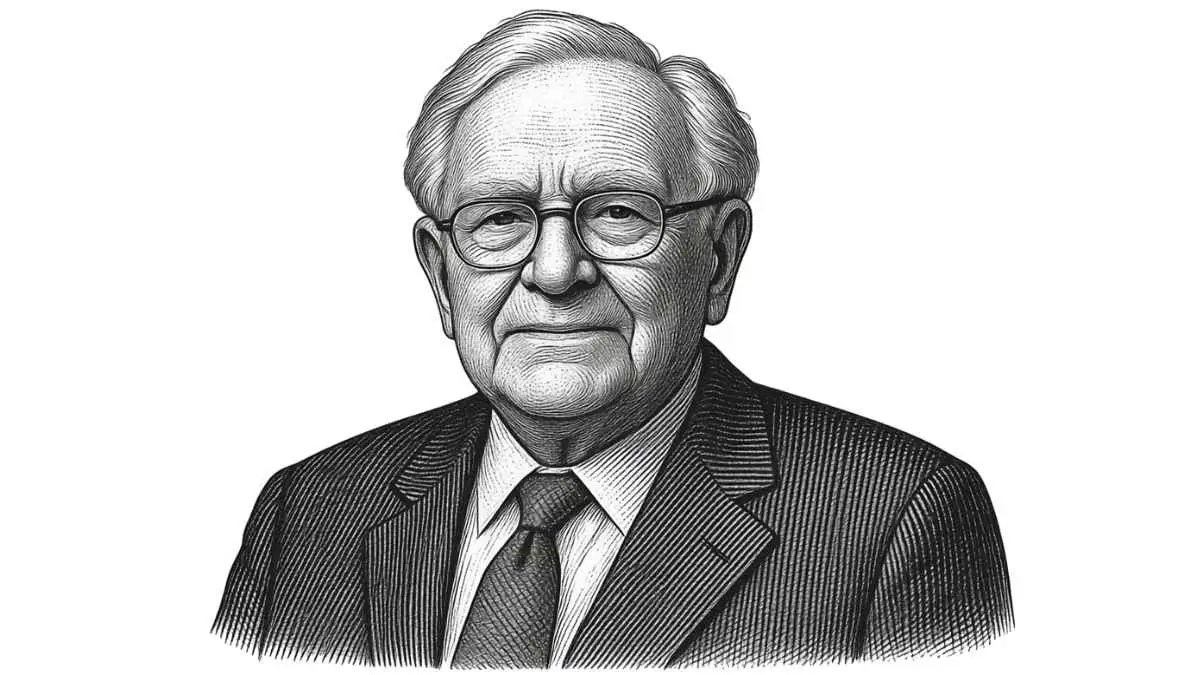
For sixty years Warren Buffett managed Berkshire Hathaway much the same way people manage their quiet lives patience, perseverance, and an unflinching determination not to let anyone rush them into an appointment. The manner of his relinquishing that position has been no different. No press conference. No spat on screen with a fellow director. Just a downhome communiqu tucked close to the conclusion of a marathon five-hour-plus Q&A session with shareholders in Omaha, a bottle of Coca-Cola in each hand, a box of See’s Candies beside him, as he slowly methodically pushed himself away from the podium he occupied longer than most of us have been alive.
The most audible note in a narrative also filled mostly with muted sounds was when the formal handoff of the CEO position to Greg Abel, on the first day of 2026. was announced. At the age of 95, Buffett would still hold the chairman slot, and he volunteered to keep coming to the office. But he also made it explicit that he would be writing no more annual shareholder missives, and that he would not be making speeches at future meetings. For a man whose missives had become impossible to ignore for an entire generation of investors and for whom an annual gathering in Omaha had acquired the spin-off nickname “Woodstock for Capitalists” these signals stood for more than er signals. They were the concluding headlines in an exit strategy he had prepared with perhaps more deftness than any other.
What Buffett has achieved at Berkshire is really very hard to describe in any way other than by the use of superlatives. From a bankrupt textile company in Massachusetts he took control in 1965, to create a trillion-dollar business encompassing the likes of BNSF Railway GEICO Dairy Queen and Duracell. Buffett’s investment performance over six decades averaged an annual return of 19.9%, against 10.4% for the S&P 500 – achieved without leverage nor financial engineering, but with a single simple approach: “buy good businesses from honest people at a fair price and then leave them alone.”
You might be interested in:
Women’s Health: The Importance of Regular Screenings and Checkups
The Algorithm Isn’t the Problem — What It Optimizes For Is
How to Choose the Right Business Model
The more difficult question — the one that will engage observers for years to come — is whether that thesis can be divorced from its author. Buffett’s brilliance wasn’t only analytical; it was also social. He drew investment and soured business relationships with his persona, not merely his skill. Greg Abel has been running Berkshire Hathaway’s non-insurance businesses since 2018 and has the unequivocal backing of Buffett. But, Abel succeeds a firm whose edge derives in part from Buffett’s singular personal reputation.
The timing of the transition may prove to be in particular vexing. Berkshire is sitting on around 348bn in cash and Abel will have to put that money to work very soon in a market environment Buffett himself called a mistake. The conglomerate’s culture of intense decentralization and independence of subsidiaries will have to endure absent the pull of its founder.
No implication of trouble there. Berkshire’s companies are resilient and its balance sheet is robust enough to absorb nearly any forecasted jolt. Yet, investors should discourage the notion that this transition seemed effortless because it looked elegant. Buffett was not only the CEO of Berkshire. He was Berkshire its soul, its face.
There is something appropriate about the way he exited: not with a press conference, but with a recommendation; not with any fanfare, but with confidence in the individual he had been training for so long. The Oracle of Omaha has gone silent. In the process, he also managed one last lesson in knowing when to step down.