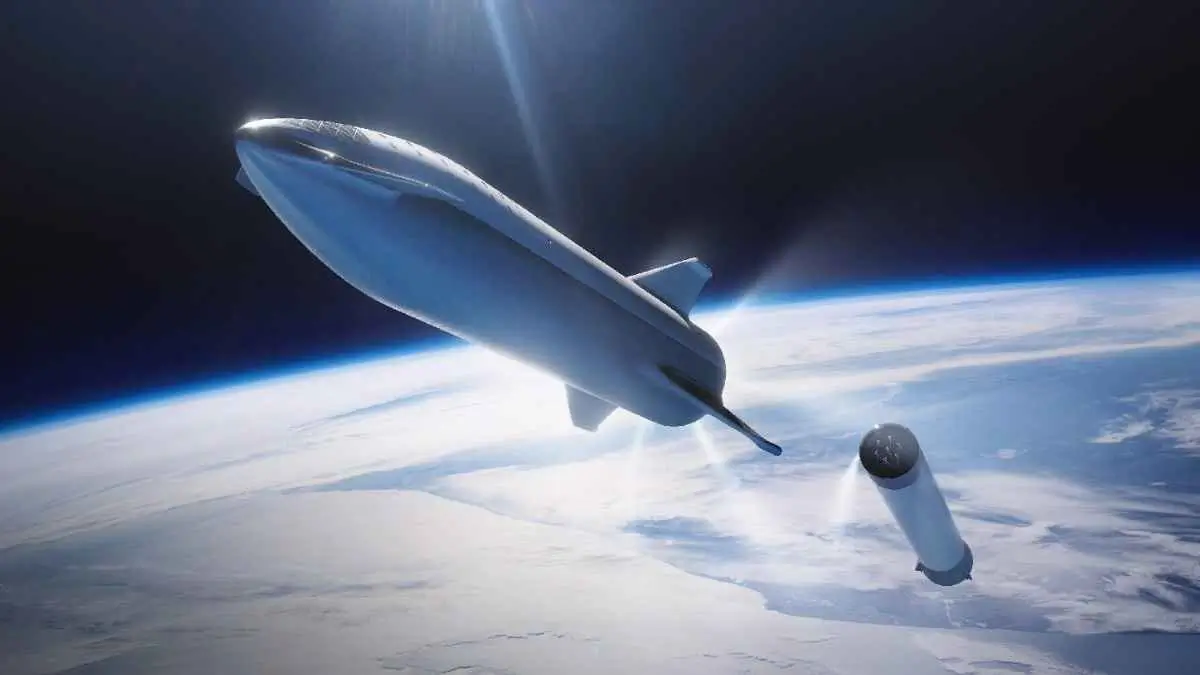
Almost all 20th century “space race” stories featured a flag planting competition and astronauts’ boot prints – a kind of ideological warfare with flags on satellites and on the grey dusty ground of the Moon. These representations are no longer accurate. The competition in 2026 is not only a race to the first arrival, but also the competition of who builds first: who constructs the pipelines, the roads, and the factories of an economy that goes beyond the Kármán line. The idea of just going out and exploring, has become very strong policy at 17 thousand mph.
From Moonshots to Infrastructure
Probably the most visible symbol of this change is the massive influx of capital being poured into orbit hardware nowadays. Experts who are following the development in the industry point out that the space economy is expected to reach $613 billion around the globe, which is very impressive when you compare it to in reality satellite imagery alone is estimated by some to grow to over $29 billion in 2030 and the propulsion industry will soon touch $20 billion, these numbers would have been pure fantasy to most twenty years ago. Actually, behind these amazing figures, there is a more intriguing explanation of how the business was in the process of cooling down in the years 2023 to mid-2025 to show the investors that the products they were investing in were actually of use to the world. The new trend that has been brought back to light has the characteristics of a very disciplined and industrious nature without having all the frills and the glamour that was around.
In-Space Manufacturing: The Microgravity Edge
In-space manufacturing could be one of the most unobtrusive, yet revolutionary, trends at the moment. Besides an environment without a gravitational pull, the unique condition of being in microgravity allows production of substances not possible on the Earth – like perfect protein crystals for medicine, unusual alloys, and ultra-pure fiber optics. Businesses which used to send only one or two capsules with test samples now have something like a regular production line with almost monthly launches of manufacturing payloads. They have even reduced their biotech labs to a size just slightly bigger than a satellite. This way, there is a major change to expect: space orbit is going to move from being just a lab to serving as a manufacturing and distribution chain.
Orbital Refueling and the “Gas Station” Economy
Usually, the time a satellite stops working coincides with when it has no more propellers, an end for something that otherwise could have been working for much longer. The remedy is being provided by servicing of satellites in space: tankers and robot tugs that go up to old satellites and refuel, repair, or move them around which would give twice the return on the investment of several-hundred-million-dollar space assets only for the purpose. This is not really a new technology but rather an economic one as space systems would be no longer discarded goods but serviceable, life-extending systems. It mirrors the change the commercial aviation was able to make a hundred years earlier.
Read More:
- Meshy AI and the Future of 3D Generative AI: Transforming Architectural Workflows
- Stress-Free Family Travel: Tips for a Smooth and Memorable Trip
- How to Make Innovation a Long-Term Business Strategy
- How Strategic Marketing Becomes the Engine of Sustainable Business Growth
- Back to the Barnyard: The Beef Tallow Face Cream Phenomenon
Reusability and the Launch Cadence War
The first thing to consider is the launch vehicle, the competitive situation here being the most obvious. Heavy-lift reusable systems are still pushing down the cost per kilogram, while at the same time a new wave of medium-lift operators, ranging from the traditional companies expanding their fleet to the first European and Asian launch providers preparing for maiden flights – are breaking down a market mainly controlled until now by state entities. The whole point strategy is basically: whoever has got affordable, regular, and dependable access to orbit, sets the pace at which all the other things on this list come to life.
Artificial Intelligence as Orbital Nervous System
If the reusable rocket is the blood circulation system of the new space era, then artificial intelligence is rapidly becoming its brain. These intelligent spacecraft are now able to autonomously navigate, prevent collisions, and respond to anomalies even as ground-control delays are still a big problem, with number of orbital objects passing through a satellite’s orbit continuing past 44,000. And, satellite constellations are also being redesigned and the AI-managed Internet is leading to optimizing usage and bandwidth of the network. This direct-to-device (D2D) connectivity is forecasted to hit a true turning point in the coming year after telecom companies incorporate satellite networks into mobile infrastructure for consumers.
The Lunar and Cislunar Frontier
That said, there is hardly a move away from the old rivalry for the Moon. Plans for sending humans to the Moon again are still being used as the reason to keep investing in space exploration on the long term horizon. The main change these days is that instead of leaving flags people are getting interested in setting up bases – like power plants, water harvesting systems, and landing areas meant not just to be a one-off place of a victory, but to act as a base for future lunar activities. The area – so to speak – of cislunar that is situated between the Earth and the Moon, is now often talked about as a space just like ISM, and orbital servicing – as something that we have to stock in case of need, not just visit once in a while.
The Common Thread
The fact that what links manufacturing servicing reusing, AI and lunar utilities together is just that space is seen as an area in which activities take place rather than as a place to where one goes is that the space industry is being developed in a similar way to the building of infrastructure for terrestrial economies. Companies and countries leading the way at the moment are not necessarily the ones with the biggest mission banners but the ones who are behind-the-scenes creating boring infrastructure fuel storage, manufacturing lines, and sensor network systems, which will be used for every future space mission. It seems, this way, that the space race has not ended, the main difference is that nowadays it is not on the launching pad but in the plant.