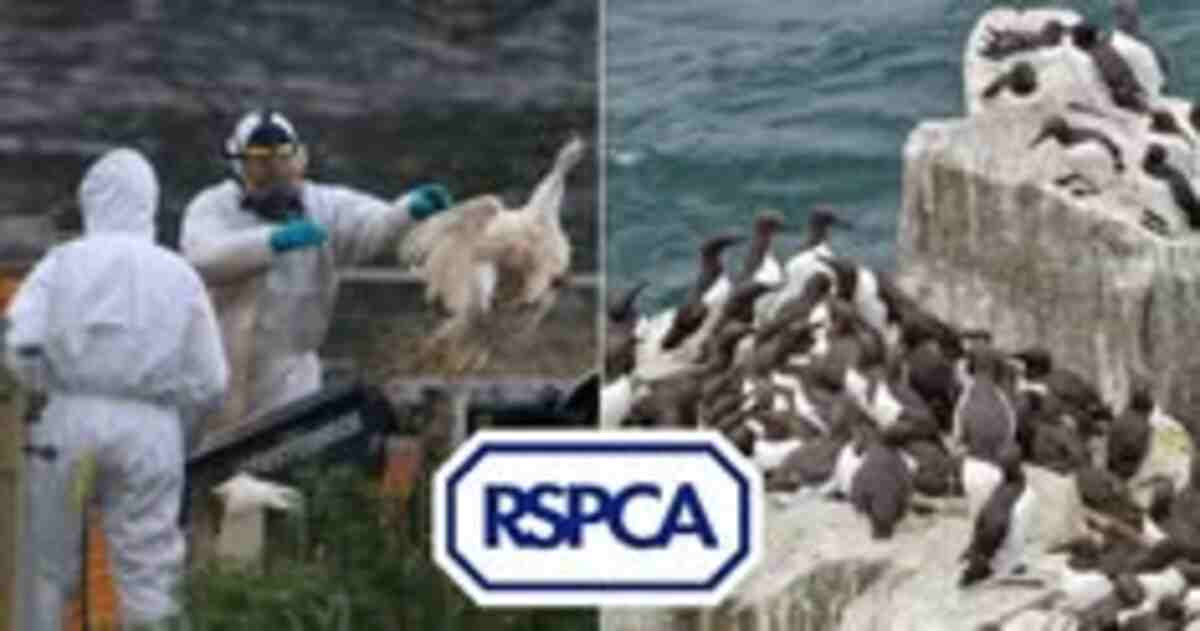
Australia has hit a sorrowful milestone in its fight against high pathogenicity avian influenza. This week, the country’s first outbreak of mass mortality due to the H5N1 bird flu virus was recorded when scores of female crested terns were seen dead or moribund along rocky outcrops off south-eastern South Australia A flock of Baudin Rocks near Cape Jaffa, around 250km south of Adelaide, was identified by helicopter on Friday. Tests by CSIRO’s Australian Centre for Disease Preparedness later found signs of the H5N1 virus in the birds.
By the time the team arrived, around 49 terns had died and a further 35 were showing signs of illness. A government spokesman called it the most definitive proof to that point that the disease has now taken hold in the native fauna and is not just carried further than mong birds. Agriculture Minister Julie Collins remained insistent and unapologetic about the projections when she spoke in Canberra.
“Australians should expect to see more spread and larger numbers now of wildlife being affected, ” she stated. Once the virus is out and running wild through our wild environments and populations, which it will be until something is done to control it, “serious numbers of mortalities will be nearly unavoidable”. Environment MinisterMurray Wattreferred to the fatalities at Cape Jaffa as ‘only the beginning’ of what will surely be a long and hard fought battle for Australian coastal ecosystems.
The virus was first detected in Australia in late June when samples from migrant seabirds, in particular brown skuas and giant petrels, tested positive. Numbers of detections have gradually increased since. By early August, positive or presumed positive findings exceeded 70 nationally with the overwhelming majority in South Australia, and the rest in Western Australia Victoria New South Wales and Queensland.
Many recent infections have been found in greater crested terns and silver gulls have also been found to test positive. No commercial poultry holdings or other farm animals have tested positive and there are currently strict biosecurity protocols in place on Australian farms, protocols which were introduced immediately upon detection of the virus. More common on the coasts, the crested terns nest communally on offshore rocks and islands. Their gregarious nature will leave them vulnerable to infection once a virus arrives. The further adaptations that provide protection from predators and the elements will become an obstacle to recovery. The dense colonies are its short term advantages will be its rapid transmission if an arriving pathogen.
Conservationists are watching for the outcome of this population as, in some of the affected islands, they are close to breeding grounds of the endangered Australasian sealion which is susceptible to H5N1 on the other side of the world. Australia and its neighbours in New Zealand have been preparing for this eventuality for years. Farm biosecurity was tightened, more shorebirds were tested, captive collections of susceptible species were vaccinated, and there were exercises in response. These measures seem to have kept the virus from reaching the commercial poultry industry to date. But wildlife are another matter altogether. Birds move about freely between state borders, and along international flyways, and there is no practical way to stop them.