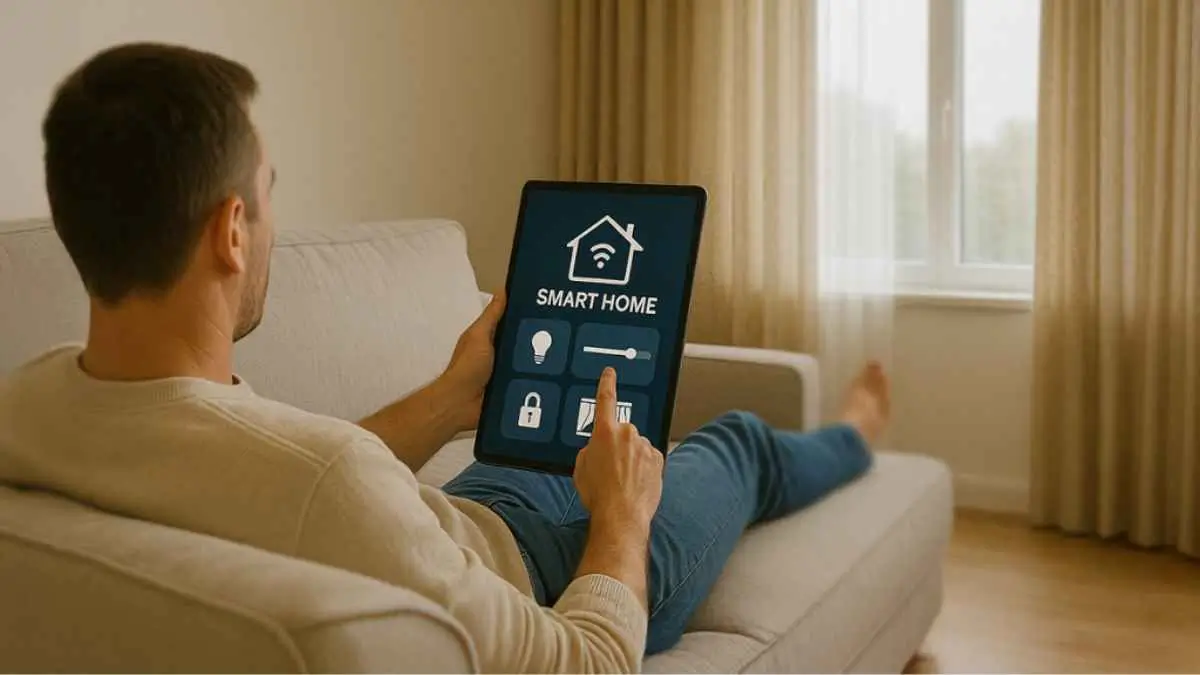
In the past, the last defense of a house was through locking up the door with a deadbolt and turning on a porch light via a timer. Security was basically measured as the strength of the wooden walls and the dependability of a lock mechanism. Now the house has evolved to have a neural network – with sensors that experience, cameras that scrutinize, and assistants that are attentive and responsive. The real issue before the homeowners is the kind, the amount, and for what purpose of intelligence should they let in their walls as they are already aware that they should make their house intelligent. One can say that the modern smart house, somewhere between a well-fortified building and a loyal servant, will have to find the balance. The house on one side should look after its owner and be his/her guard and on the other side it has to be the master who gets the best service out of you quietly, efficiently and without becoming a threat.
Security First, Convenience Second
The number one rule of smart home shopping is that one should first consider the order in which we do the purchases. A person should buy security devices and appliances for home protection before buying those providing comfort and conveniences. Even if you have a smart light that is synchronized with your mood change, it is the video doorbell showing a stranger on the porch that is a matter of life and death. That is not a criticism of comfort – it simply shows preference. A home that is comfortable but has no surveillance is just pleasant; a home that is under surveillance but uncomfortable is, at base, safe. An ideal system would do both, if you have to pick a side, security-first is the only way to play the game.
In practice, it means that we should be starting by setting up three main areas: entry monitoring (e.g. video doorbells, door and/or window sensors), motion and presence detectors (cameras both inside and outside, lightings activated by motion), and access control (smart locks with a log history). Together, these will work as the structure. Everything else like voice assistants, smart thermostats, robotic vacuums are just adding layers – muscle and skin – to this structure.
The Trouble With “Subservient” Technology
And this where editorial frankness comes in: a domicile appliance that obeys simply is not automatically good. A lack of discrimination is a flaw. A good smart lock that unlocks as soon as you say the word ‘open’, no matter who say it, not only does not serve you, it serves anyone else close enough to hear. Full obedience from any home appliance must mean discrimination and relevance. The smartest devices are those that can pick out context, and identify the sound and sight of their true owner, and a nearby phone, and your unique habits.
A device that can’t tell that the voice of a homeowner, and an intruder mimicking that voice, is a flaw. This is the uncomfortable truth vendors seldom oversell: the more ‘helpful’ and flexible a device is, the more the opportunity it gives for attack. If you subscribe to the cloud-enabled, watch-enabled, program-mail-enabled gadget, then you are opening the door not just for burglars, but for anyone who hacks the programming behind it. ‘Picking’ devices then becomes a matter of deciding who you’ll trust.
What to Actually Look For
There are a couple of reasons why some gadgets really are worth their money and others which just appear to show well in a store:
Local processing over cloud dependency. Products that identify movements, authenticate facial identities or lock a door without asking a distant server first react much more promptly and are less vulnerable to outages or privacy breaches. Obviously convenience of cloud comes with a price too and it shouldn’t have to be the only option available.
Encrypted, auditable communication. Any smart lock or camera should use end-to-end encryption and also record a trace of each action such as who did it, when, and from where.
Interoperability standards. Matter or Thread are very important to avoid manufacturers’ lock-in and the problem of devices running outdated versions.
Battery and power resilience. There’s no such thing as a security system if it can’t cope with power failure. Backup with batteries and local storage of images are essential.
Physical fallback. A smart lock shouldn’t eliminate the possibility of a mechanical backup entirely, even a simple key is a testament to timelessness and durability.
The Editorial Verdict
Shopping for home technology it’s easy to be attracted to a highly interactive system – a house that talks back when it’s spoken to, locks itself automatically, even greets its owner by name. Yet, a house’s primary function should not be to delight but to keep watch. The suitable technology that we would consider is the one that is able to observe attentively and choose to follow orders. Faithful to the desires its owner, distrusting of all others, and modest enough to fail safely rather than to fail open.
Ultimately, the cleverest home is one that contains a small number of high quality gadgets, rather than having a big number of gadgets; and the gadgets in this home will be organized such that security becomes their base layer, convenience as layers of their rewards built upon security; and lastly, their obedience shall be always subject to their user’s good judgment. Buy wisely, and your home will respond to your voice – not even stop – it will actually take care of you.