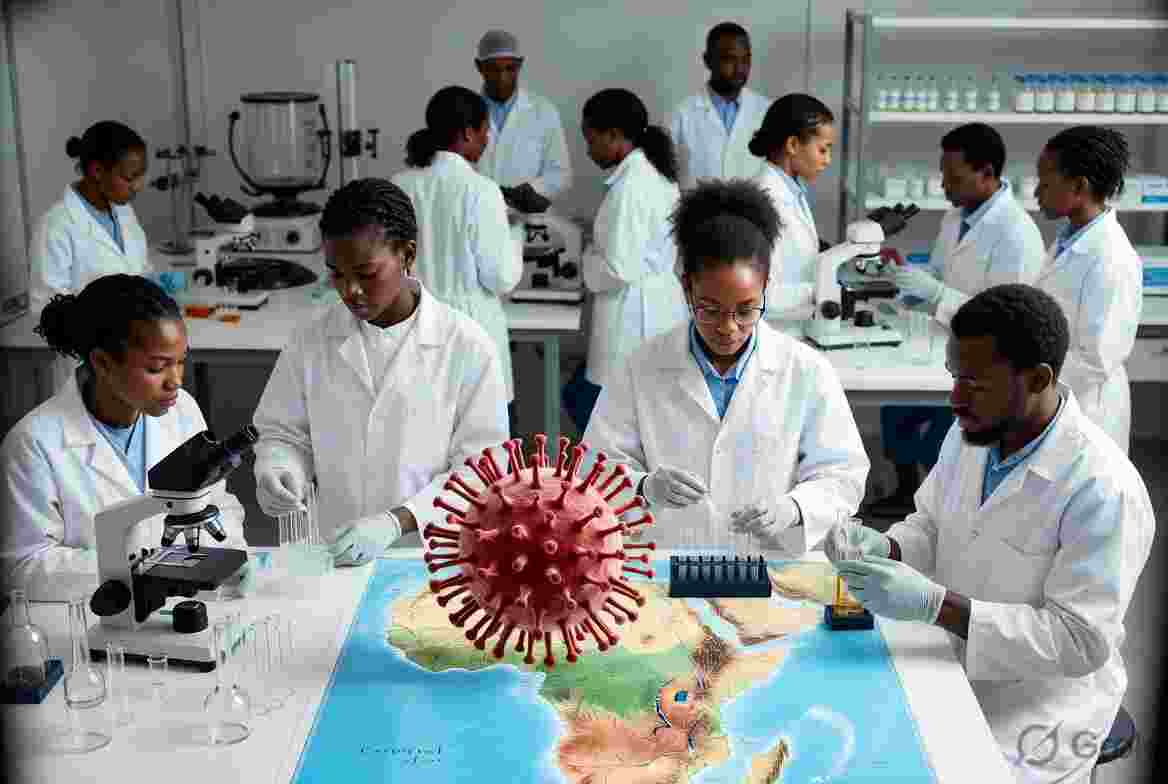
As the World Health Organization declares the Bundibugyo Ebola outbreak spanning the Democratic Republic of Congo and Uganda a Public Health Emergency of International Concern, Africa CDC is issuing a strong call for accelerated local vaccine manufacturing across the continent. The urgency comes amid rising cases and the recognition that Africa cannot continue depending on external suppliers during fast-moving health crises.
Director General Dr. Jean Kaseya and senior officials at Africa CDC have emphasized that building sovereign vaccine production capacity is no longer optional but essential for both immediate outbreak response and long-term resilience. The current Bundibugyo strain lacks widely approved vaccines, unlike the more common Zaire Ebola variant, highlighting critical gaps in rapid response tools. With cross-border movement and regional insecurity complicating containment, local manufacturing could dramatically shorten the time between outbreak detection and deployment of tailored countermeasures.
Africa CDC’s push aligns with the broader Africa Health Security and Sovereignty Agenda, which targets producing 60% of the vaccines and health products the continent needs by 2040. Recent partnerships, including advanced talks with South Africa’s Aspen Pharmacare, aim to create predictable demand and supply frameworks that give manufacturers confidence to invest in scalable production facilities. These discussions, announced during the Africa Forward Summit, focus on priority antigens and progressive scale-up to tens or hundreds of millions of doses annually.
The timing is critical. During the COVID-19 pandemic, Africa imported over 99% of its vaccines, facing delays that cost lives and economic stability. The ongoing Ebola situation in Ituri Province and neighboring Uganda demonstrates how quickly threats can escalate in high-mobility regions. Africa CDC has convened high-level meetings with pharmaceutical companies, including Moderna, BioNTech, and Johnson & Johnson, to assess available medical countermeasures while simultaneously advocating for technology transfer and local fill-finish capabilities.
Building Capacity Through Training and Infrastructure
To support this vision, Africa CDC and the African Vaccine Manufacturing Initiative are launching programs to train thousands more biomanufacturing experts. The continent currently has fewer than 3,000 skilled professionals in the field but needs over 12,000 to meet 2040 targets. Initiatives like the Industrial Fellowship Programme provide hands-on experience at facilities in Egypt, Senegal, and South Africa, creating a pipeline of talent ready to operate advanced production sites.
Countries like South Africa are already making strides, with projects such as BioVac’s expansion into one of Africa’s largest multi-vaccine manufacturing facilities. These developments signal growing momentum, yet experts stress that regulatory harmonization, sustainable financing, and guaranteed offtake agreements remain necessary to attract large-scale investment.
Global Benefits of African Vaccine Sovereignty
Local production does not only benefit Africa—it enhances global health security. Faster regional manufacturing reduces pressure on international stockpiles and enables quicker containment before diseases spread through travel and trade. Partners including Gavi, CEPI, and the World Bank have shown increased willingness to support these efforts through financing and technical assistance.
Africa CDC officials argue that true health sovereignty means African nations can detect, prevent, and respond to threats with homegrown solutions. In the context of the current Ebola emergency, this could involve rapid development or adaptation of vaccines once the strain is fully sequenced, alongside strengthened laboratory networks and cold chain infrastructure across affected regions.
The call comes as Africa CDC activates a continental Incident Management Support Team to coordinate surveillance, case management, and cross-border efforts. While immediate focus remains on containing the outbreak through proven public health measures, leaders are using the moment to accelerate long-term structural changes.
As the world watches the response in Central Africa, Africa CDC’s message is clear: investing in local vaccine production today will save lives tomorrow—not just on the continent, but globally. The coming months will test whether this renewed urgency translates into concrete progress toward a more self-reliant Africa capable of facing future health threats with confidence and speed.