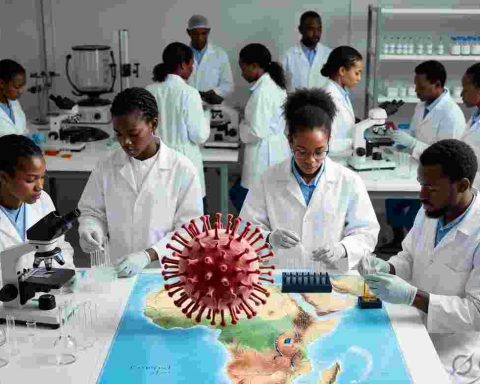
The fault lines of a significant global health problem lie in very tangible, everyday situations across the world. From the remotest regions of Africa struck by wars to large metropolitan cities in Europe and North America, vaccination rates are momentarily plateauing or even declining, So the risk of disease is growing for millions of children and adults. Health professionals notify these unvaccinated pockets do not only represent figures on a chart but families loyal to their members who may have to witness their suffering due to the sudden appearance of measles diphtheria polio, whooping cough cases in different regions.
Since the last decade or so, the global childhood immunization coverage for the main vaccines like the third dose of diphtheria-tetanus-pertussis (DTP3) has remained stable at 85% which is only a fraction of 90-95% required for the vaccination coverage that leads to herd immunity and stops the disease transmission. As per the latest data from WHO and UNICEF, more than 14 million children have been identified as zero-dose which means that they do not receive any routine vaccines at all while almost 35 million children have not been fully vaccinated against measles. The factors that contribute to this dilemma are mixed up to conflict, funding cuts, misinformation, and residual effects from the large-scale COVID-19 pandemic disruptions are the main reasons behind it.
Sudan is a case in point. It is the epicenter of a civil war in which the health infrastructure has been largely destroyed. Measles vaccine coverage has dropped to 46% at the lowest point. Other areas affected by conflict experience similar situations as families are left with no other option but to flee violence and displacement if they want to manage to go to the clinic. Health workers do the vaccination under the threat to their lives, but the supply shortage and canceled campaigns keep entire communities at risk. What we are witnessing is a sudden increase in certain illnesses which in many cases can mean very serious complications, lifelong disabilities, and death. Children are Mainly at risk because their immune system is still insignificant.
Europe too faces these problems. Several European countries have lost their measles elimination status because the level of coverage dropped below a critical point. In the United Kingdom and other parts of Europe, there have been outbreaks that have put a strain on already pressured healthcare systems. The vaccine hesitant parents, who have been convinced by misinformation campaigns on the internet, oftentimes downplay the risks. Still, once the highly contagious measles virus gets into a community with several vaccinees, it spreads so fast that really literally all the schools, hospitals, and neighborhoods get affected.
One cannot also overlook Really the United States has witnessed in recent times a gradual rise in the number of measles cases coinciding with low vaccination coverage under the 90% threshold in the areas setting of the incidences. In fact, there are some rural areas as well as certain communities where such disparities tend to be wider which very much goes to show how geographic and social factors contribute to the problem. Health officials stress Truth is even country-wide high averages in vaccination coverage can mask local vulnerabilities susceptible to outbreaks.
Another destabilizing element to the situation are continued donor withdrawal of funds that have, among many other things, caused disruptions of routine immunization surveillance as well as catch-up campaigns in a large number of countries. Through various initiatives, such as Gavi aims to reach zero-dose children and protect 500 million more by 2030 But world experts finally warn that only a sustained global commitment can bring the needle to their target. Volatile and short-lived commitment lead to loss of hard-won gains of the past decades.
The human cost is very extensive. A child who gets measles may have to endure a very high fever, a rash and, in some cases, even complications like pneumonia or encephalitis for a couple of weeks. It is the poor families that suffer the most, as their access to treatment is limited. But, the solutions are present: we can close these gaps by strengthening the routine immunization programs, fighting misinformation through knowledgeable community people and making sure that everyone has equal access to vaccines.
World Immunization Week and the continuing global health debates clearly indicate that vaccines are still among the most potent means to protect life. Parents, policymakers and health officials all over the world have a role to play – the more doses are missed, the higher the risk that a completely preventable outbreak will turn into a major tragedy. Eliminating vaccination gaps at present is actually putting money into better, safer communities tomorrow by not only safeguarding individuals but whole populations from the threat of diseases that are making a comeback.