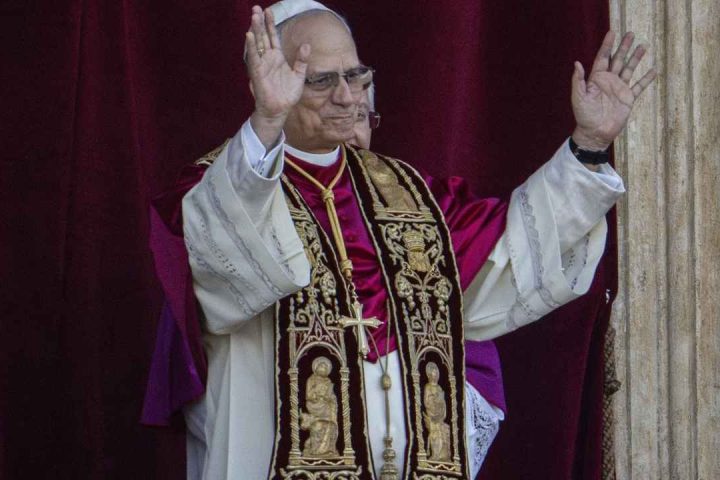

In a historic moment for the Roman Catholic Church, Cardinal Robert Francis Prevost, a 69-year-old Chicago native, was elected the 267th pope on May 8, 2025, becoming the first American to ascend to the papacy. Choosing Pope Leo XIV, Prevost’s election marks a significant milestone, breaking a long-standing taboo against selecting a pope from a global superpower like the United States. His journey from a modest upbringing in Illinois to the throne of St. Peter is a testament to his global experience, pastoral heart, and alignment with the reforms of his predecessor, Pope Francis. As the world’s 1.4 billion Catholics look to him for leadership, Leo XIV steps into a role fraught with challenges and opportunities, balancing continuity with the need for a fresh vision.
Born on September 14, 1955, in Chicago to parents of Spanish and Franco-Italian descent, Prevost grew up in a devout Catholic family in Dolton, Illinois. His mother, a librarian, and his father, a high school principal and catechist, instilled a deep faith that shaped his early years. Prevost served as an altar boy and pursued a degree in mathematics at Villanova University before studying theology at the Catholic Theological Union in Chicago. Ordained a priest in 1982 as a member of the Augustinian Order, he embraced a life of service rooted in humility and community, values central to the order founded by St. Augustine.
Prevost’s career is distinguished by his extensive missionary work in Peru, where he spent over two decades ministering to marginalized communities. Arriving in Peru in 1985, he served as a parish pastor, seminary teacher, and diocesan official, earning Peruvian citizenship and the affectionate nickname “Latin Yankee” in Vatican circles. His work in Trujillo and later as Bishop of Chiclayo from 2014 to 2023 highlighted his commitment to the poor and disenfranchised, echoing the social justice priorities of Pope Francis. Prevost’s fluency in Spanish, Italian, and other languages, combined with his global perspective, made him a bridge-builder in a Church increasingly focused on its universal mission.
In 2023, Pope Francis appointed Prevost as the Dicastery for Bishops prefect, a powerful Vatican office responsible for vetting and recommending bishops worldwide. This role elevated his profile among the College of Cardinals, positioning him as a key figure in shaping the Church’s leadership. Francis also named him a cardinal in September 2023 and, in early 2025, promoted him to the senior rank of cardinal-bishop. Prevost’s rapid rise, culminating in his election after just four ballots on the second day of the 2025 conclave, surprised many, given his relatively low public profile and the historical reluctance to elect an American pope.
The choice of the name Leo XIV is rich with symbolism. It honors Pope Leo XIII, who served from 1878 to 1903 and issued the encyclical Rerum Novarum, which laid the foundation for modern Catholic social teaching by advocating for workers’ rights and economic justice. According to Vatican spokesman Matteo Bruni, Prevost’s selection of this name reflects his focus on human dignity, labor rights, and the Church’s role in addressing contemporary challenges, including those posed by artificial intelligence. The name also evokes Pope Leo I, known for his theological reforms and courage in confronting political powers, suggesting Prevost’s intent to lead with strength and intellectual rigor.
Pope Leo XIV struck a tone of unity and peace in his first address from the balcony of St. Peter’s Basilica, delivered in Italian and Spanish. “Peace be with you all,” he declared, urging the Church to be a “missionary church” that “builds bridges” and welcomes all. Paying tribute to Pope Francis, whose death on April 21, 2025, prompted the conclave, Leo emphasized continuity with his predecessor’s inclusive agenda. His remarks, devoid of English, underscored his global identity, particularly his deep ties to Latin America, where he warmly greeted his former diocese in Chiclayo.
Leo XIV’s papacy begins amid significant challenges. The Church faces internal divisions between progressive and conservative factions, with debates over issues like same-sex blessings, women’s roles, and doctrinal enforcement. While Prevost supported Francis’s decision to allow blessings for same-sex couples and include women in the Dicastery for Bishops, he has emphasized the need for bishops to interpret such directives contextually, suggesting a moderate approach. His socially conservative stances, such as opposition to ordaining women as deacons, may temper expectations of radical change. Still, his commitment to synodality—a more inclusive, participatory Church structure—signals fidelity to Francis’s vision.
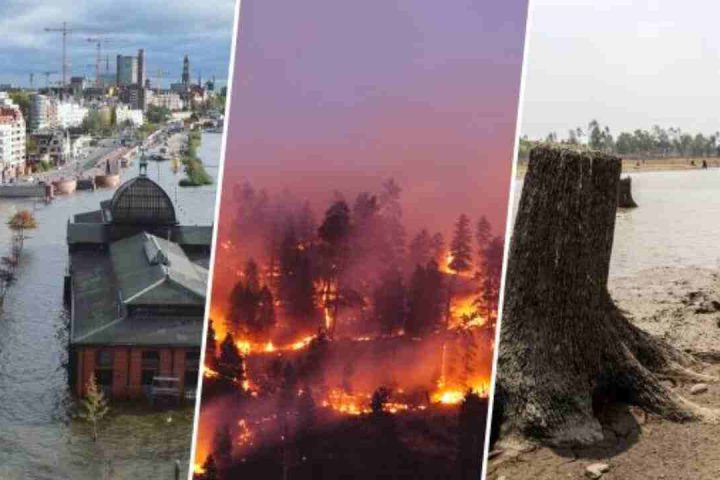
External challenges include ongoing scrutiny over the Church’s handling of sexual abuse scandals. Prevost has faced criticism for alleged mishandling of abuse cases in Peru and the United States, though the Vatican and his former diocese have denied his direct involvement. These controversies will test his ability to restore trust and implement robust reforms. Additionally, Leo XIV inherits a Church navigating global issues like climate change, migration, and geopolitical conflicts. His prior advocacy for environmental action, including Vatican initiatives like solar panels and electric vehicles, positions him to continue Francis’s emphasis on ecological stewardship.
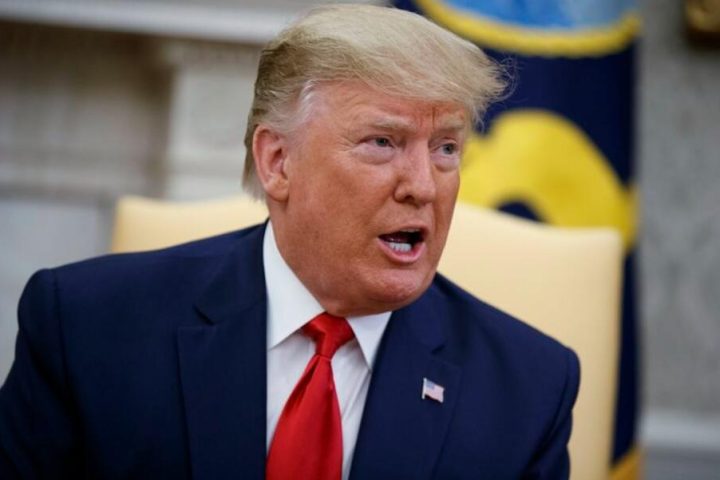
Reactions to Leo XIV’s election have been jubilant, particularly in Chicago and Peru. Chicago Mayor Brandon Johnson proclaimed, “Everything dope, including the Pope, comes from Chicago!” while Peruvian Catholics celebrated him as “one of their own.” World leaders, from U.S. President Donald Trump to Russian President Vladimir Putin, extended congratulations, though Prevost’s past criticism of Trump’s policies suggests potential tensions with American political figures. For American Catholics, divided along ideological lines, Leo’s election is both a source of pride and a call to unity.
As Pope Leo XIV prepares for his inauguration Mass on May 18, 2025, in St. Peter’s Square, the world watches a leader described as calm, discerning, and authentic. His episcopal motto, In illo Uno unum (“In the One, we are one”), encapsulates his vision for a united Church that embraces the marginalized and dialogues with the modern world. Whether he can navigate the complexities of his role while maintaining the “pastoral heart” praised by peers remains to be seen, but his historic papacy promises to reshape the Catholic Church’s global narrative.