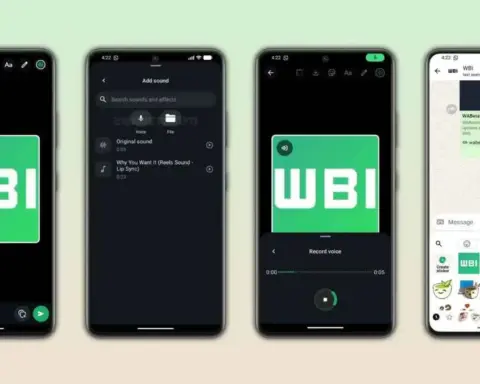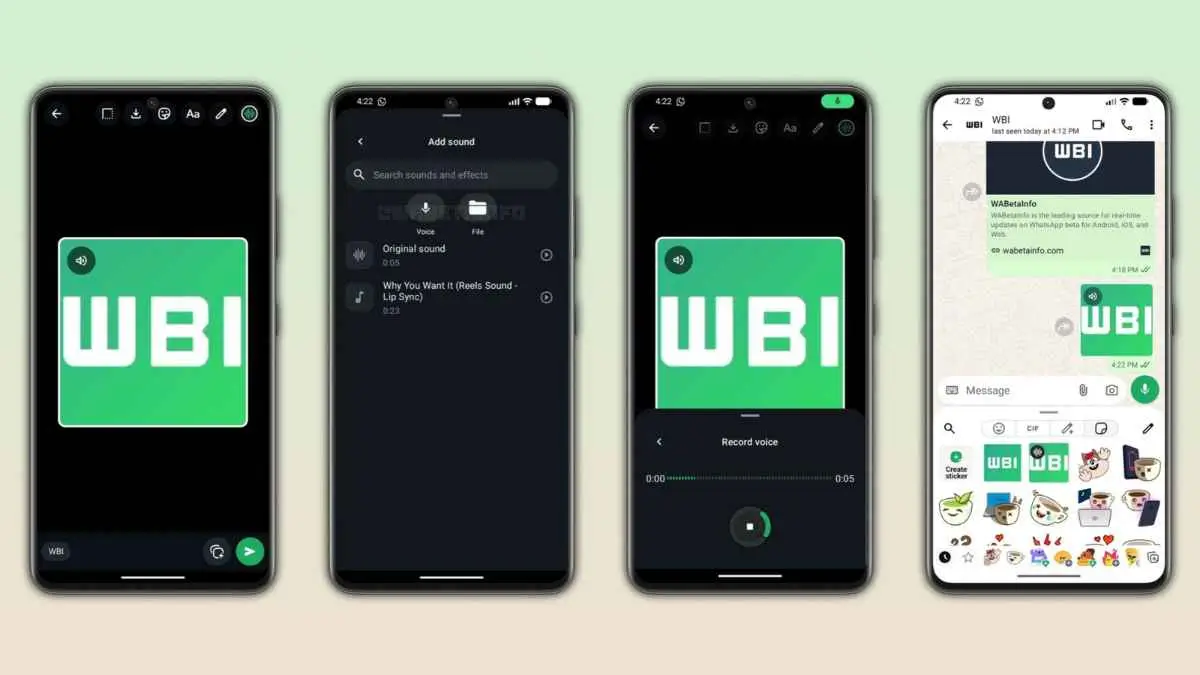
Whilst WhatsApp has traditionally offered a largely non-verbal means of communication (to express feeling, humour and/or a sceptical brow), Meta is now experimenting with audio responsive stickers. Within the latest Android beta, WhatsApp has introduced ‘audio stickers’ – animated stickers which can include a short audio component. This functionality has been seen in beta version 2.26.41.3 and is now being rolled out to some Android beta participants in version 2.26.47.1. Although seemingly a simple addition, it may have a greater impact on group communication than any other sticker enhancement for many years.
Video and image based stickers can be personalised with audio. Options include the original video audio, standardised audio effects, user uploaded audio and voice notes. Video stickers automatically include the initial 5 seconds of the original video audio. Image stickers can include up to 10 seconds of audio. By default, audio stickers are set to ‘muted’ within WhatsApp chats. A symbol indicates where audio has been added and this can be played by selecting it. The audio will play thrice and then cease. As with other WhatsApp functionality, the app acknowledges and adheres to users’ device ‘do not disturb’ settings. End-to-end encryption is also applied to both the sticker and audio.
Whilst considered a considerate default setting, it illustrates how Meta has taken on board lessons from the past relating to auto-play and uninvited audio. Nevertheless, it is within multi-layered group chats – perhaps involving 30 family members and twelve different sub-conversations – and at an unusual time such as 6am, that the true examination of audio stickers occurs. It does not take much interaction with audio stickers for them to become tiring within busy chats. Indeed, there are already concerns being expressed about the potential for audio stickers to increase group chat audio levels. Users are calling for specific muting features for them.
Recommended for You:
- Meta Launches Direct: A New Era of Standalone Messaging and Social Connectivity
- Remus Malware Uses Fake Google Sheets Extension to Steal Gmail Messages
- 1Password Data Breach: Hacker Steals Customer Data Through Employee’s GitHub
Interestingly, culture is already progressing ahead of the beta. In Brazil for example, it appears that the notorious ‘Gemidão do Zap’ – whereby somebody sends a surprising, highly audio-enthusiastic fake message – has been reborn via audio stickers. Again, it is the very functionality which enables friends to perfectly synchronise meme sending which can equally be exploited by a mischievous individual. Unfortunately, the audio symbol provides at best, a poor indicator of forthcoming audio material, especially as recipients are often unaware of its nature.
Whilst WhatsApp has yet to confirm when it will officially launch audio stickers, even Android beta participants are not currently widely receiving access to them. Rather than simply enhancing an individual’s ability to mute audio stickers, WhatsApp should further develop collective social management tools. Additional functionality could involve an option to switch audio stickers on and off within specific chats, improved indicators regarding audio, and the ability to set group-specific settings.
Audio stickers represent a logical evolution of WhatsApp’s communication offerings and have great potential. However, as previously mentioned, this potential can only be realised with appropriate authorisation – both from the sender and the recipient. Should Meta deem its current default setting to be the optimal solution, it runs the risk of transforming WhatsApp’s most personal environment into an audio cacophony. Alongside evaluating relevant coding, the beta should also assess suitable social behaviour around audio stickers.