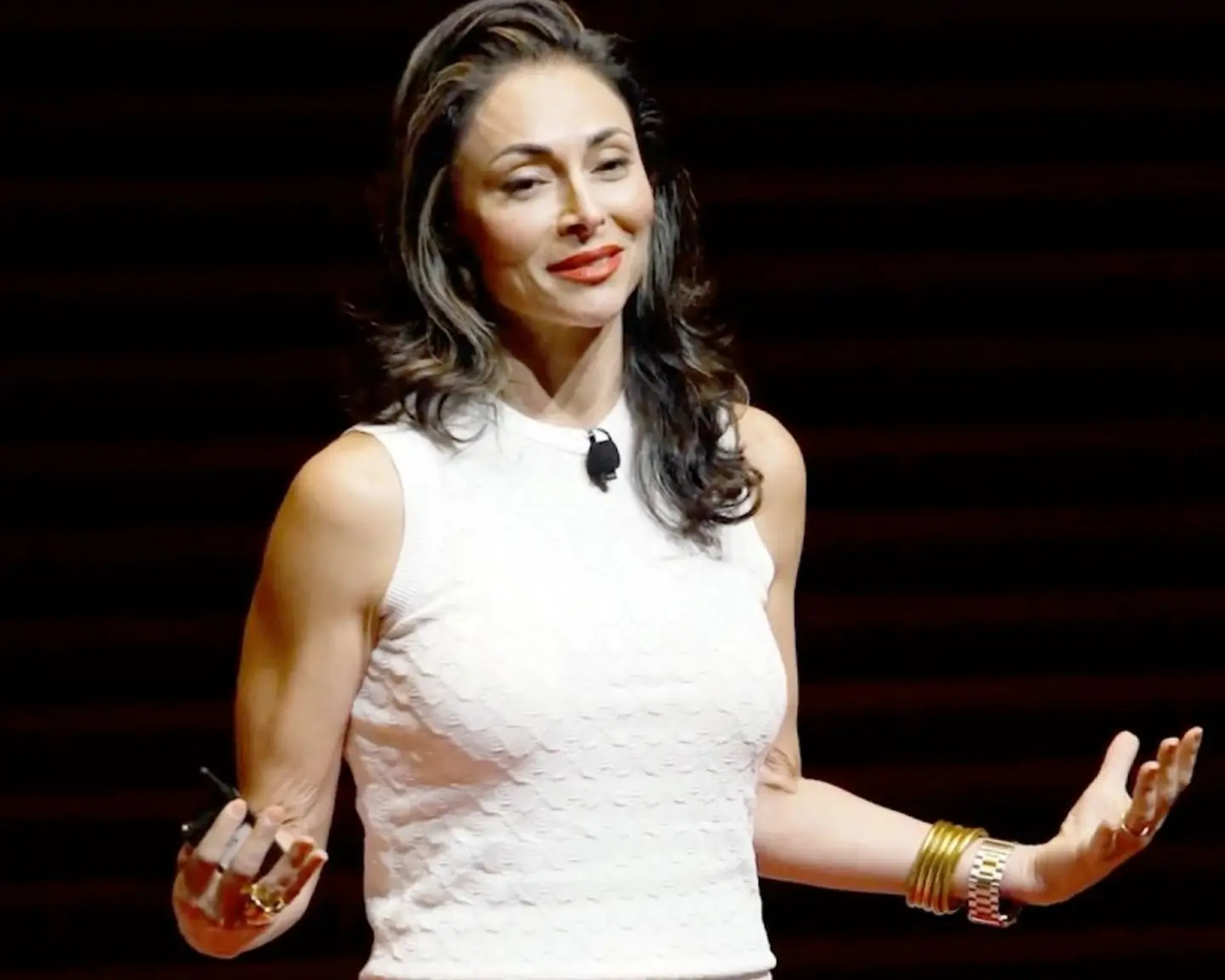
Artificial intelligence is not an experiment in technology anymore; it’s a core business capability. However, to achieve AI at enterprise scale, you need to do more than just pick the newest model or platform. Sol Rashidi is a leading Chief AI Officer and AI Strategist, who has made a career out of that gap between ambition and execution in AI. Her work includes enterprise AI, data strategy, workforce preparation, governance and the business challenges of taking emerging technology and turning it into usable systems.
Rashidi’s career is particularly impressive because she pursued enterprise AI leadership long before the current generative AI boom. Her career path offers a great lens into how organizations can think about AI not just as a technology investment, but as an organizational transformation.
Who Is Sol Rashidi?
Technology executive, AI strategist, author, educator and keynote speaker with extensive experience in enterprise data and AI. Rashidi is now a Senior Fellow at Harvard Kennedy School where she is listed as an authority on enterprise AI. The school says she was appointed the first-ever Chief AI Officer in the enterprise sector in 2016, has held multiple Fortune 100 C-suite roles and helped launch IBM Watson in 2011.
She has held executive leadership positions with Sony Music, Merck, Estée Lauder, Royal Caribbean, IBM and Amazon. Cyera today appointed her its Chief Strategy Officer for Data and AI. It is this combination of technical, executive and operational experience that is core to her approach to AI strategy.
From Data Leadership to Chief AI Officer
A Career in Enterprise AI: Early Days
Rashidi’s AI career started long before artificial intelligence was a boardroom buzzword. Her official bio says she helped launch Watson at IBM in 2011. She then moved up through senior data, analytics and technology leadership roles, gaining experience in areas where AI has to work in complex enterprises, not in controlled laboratory environments. According to Harvard Kennedy School and other professional biographical sources, she was appointed an enterprise Chief AI Officer in 2016.
That timing matters a great deal, from the technology industry’s perspective. The title has been around in enterprise leadership long before the current explosion of interest in generative AI, suggesting that organizations were already dealing with questions around AI governance, adoption, data and business value.
AI Strategy by Sol Rashidi
Rashidi’s work often emphasizes that the first consideration when deploying AI should be the business problem, not the technology. Her official profile highlights translating complex technology into practical, scalable business results. She also focuses on data integrity and security, workforce readiness and the role of people in AI transformation.
That view addresses one of the major challenges facing companies today.
An organization can buy AI tools fairly quickly. What is much more complicated is creating an operating environment where people know how to use those tools, data is properly governed, security risks are understood and the resulting systems create measurable value.
AI as an Amplifier of Humanity
Rashidi often discusses AI as a means of augmenting human capabilities, rather than substituting for them.
She also worked on the Human Amplification Index, a framework and platform to investigate the impact of AI investments on things like productivity, efficiency, effectiveness and workforce strength.
The business question is a good one: if an organization spends huge amounts on AI, how does it know the investment is actually making the company – and its workforce – better? That changes the conversation from just adopting technology to delivering tangible organizational outcomes.
Why Her Point of View Matters to Business
Playing around with a consumer chatbot is a very different game from enterprise AI. Large organizations need to consider data access, cybersecurity, regulatory requirements, legacy systems, organizational structures, employee skills, procurement and change management.
Rashidi’s career has been played out largely in this environment. Today, she’s at Cyera working on data and AI strategy, and her public speaking and advisory work is focused on AI implementation and workforce readiness.
That makes her perspective relevant to executives asking practical questions, like:
- What are the AI use cases we should focus on?
- What is the process of training employees for AI adoption?
- How can we protect sensitive data?
- How to measure AI investments?
- What should human workers continue to do?
- How can AI move from pilot projects to day-to-day operations?
These questions more and more determine the sustainability of enterprise AI initiatives.
Sol Rashidi’s Latest AI Leadership
Her work has continued to expand in the current AI transformation. AVI-SPL announced in February 2026 an executive advisory engagement with Rashidi on AI opportunities, risks and applications across customer solutions, operations and employee experience.
Cloudera announced Rashidi as a keynote speaker for the EVOLVE26 conference, June 2026, which focused on operationalizing data and AI in diverse cloud and infrastructure environments.
These engagements are part of a larger shift happening in enterprise AI as companies are becoming more interested in moving beyond experimentation to governance, deployment, workforce readiness and measurable business impact.
Author, Educator, and AI Thought Leader
Rashidi is also the author of Your AI Survival Guide, which guides business leaders through adopting AI. Her work also extends to education. She is a Senior Fellow at Harvard Kennedy School, and her professional profile also mentions teaching and executive education in the areas of AI, automation and human-centered technology.
Why it matters This education piece matters because AI adoption is not just a technical challenge. Executives need to get a handle on what artificial intelligence can actually do. Employees require practical AI literacy. Governance and security frameworks are required for technology teams. Business leaders need ways to tie AI projects to measurable goals.
The bigger lesson of her career is
The most valuable lesson you can take from Sol Rashidi’s career isn’t a piece of AI tooling or a prediction of what’s to come. It is the link of strategy to technology and the link of strategy to organizational strategy. Artificial intelligence systems can be technically impressive, and yet not deliver meaningful business value if they are not used by employees, if data cannot safely support them, or if leadership has not identified a clear problem to solve.
Rashidi’s career shows why the new Chief AI Officer role is more than buying technology. Responsibilities may include strategy, data, security, workforce planning, governance, innovation and executive decision making.
Conclusion
Sol Rashidi is part of a generation of enterprise AI leaders that had already been working with artificial intelligence before the current generative AI revolution captured the public’s attention for the technology. Her experience in data, AI, enterprise leadership, education and advisory work brings a practical perspective to one of the industry’s most significant challenges: how to translate the potential of AI into responsible, scalable business execution.
As organizations move further along their AI journeys, the question will not be whether companies can do AI, but how well they can do AI and infuse it with data, people, processes and long-term business strategy.