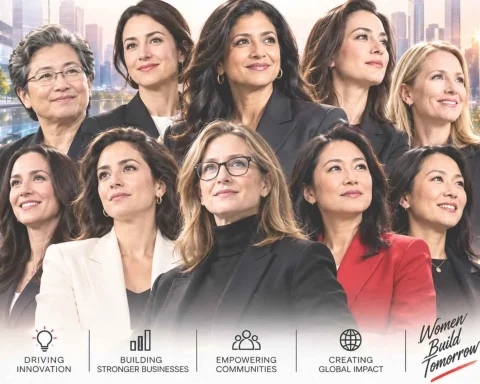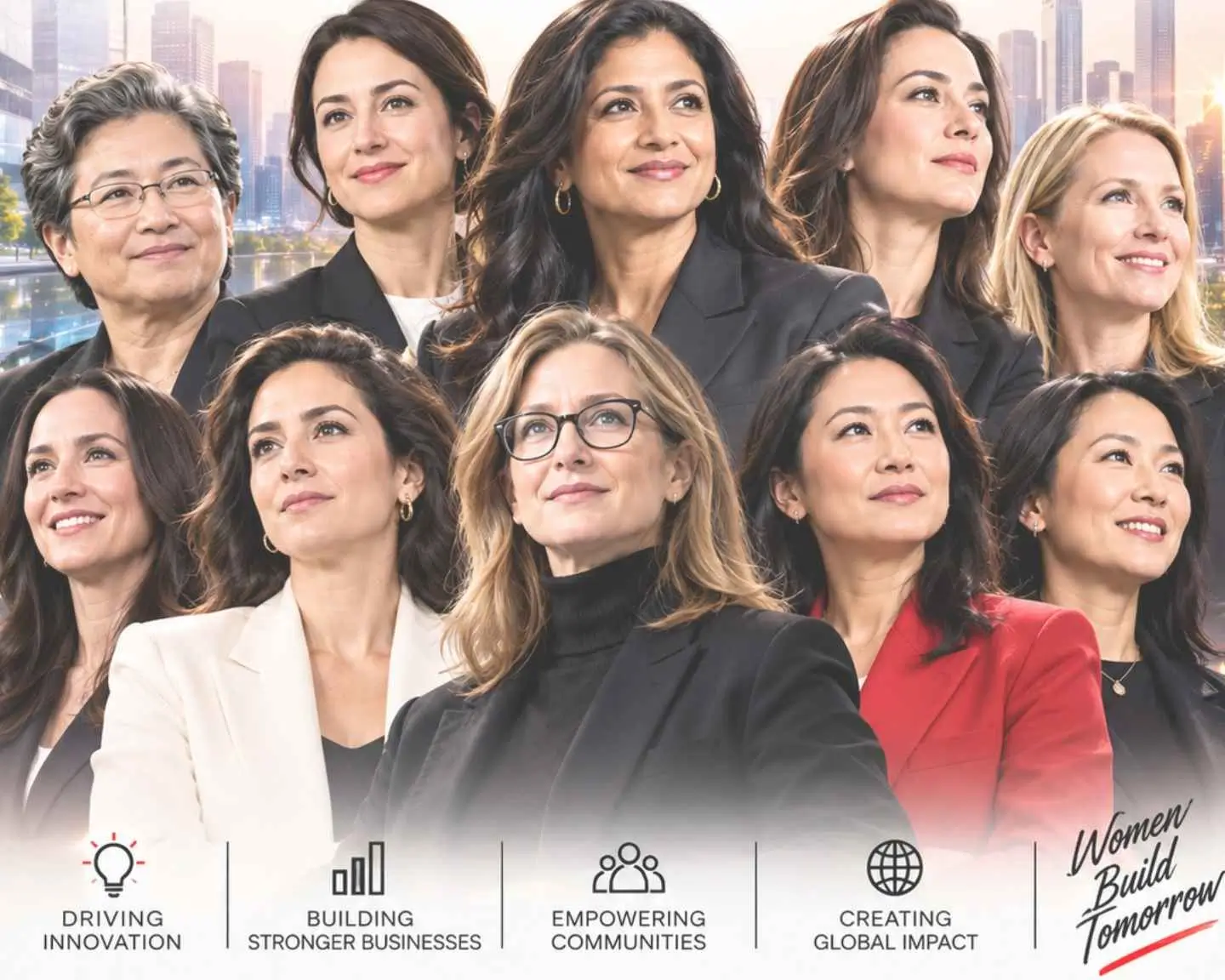
Women are shaping the future of business, technology, finance and society. They are women whose leadership reaches far beyond the organizations they lead. They are the generation of women at the top of their fields, across sectors, across continents making decisions, redefining markets, fueling breakthroughs in innovation, pushing back the stereotypes of female leadership and paving ways for those who will follow behind them.
Many have made it but they are not profiled here because they are women who have fought the odds against them just to make it but because of what they are building, the direction of their decisions and the scale of change they are creating. Here are 10 of the most inspiring women leaders in the world shaping the future today.
1. Dr. Lisa Su — Chair and CEO, AMD
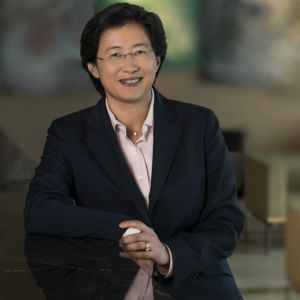
In 2026, it is hard to imagine a figure in the semiconductor industry who will garner as much respect as Dr. Lisa Su. When she assumed the coveted CEO position of Advanced Micro Devices in October of 2014, the company was hovering around a dollar a share and bandied about as a rundown asset with limited long-term potential. AMD’s market capitalization has since increased from roughly $3 billion to north of $700 billion in 2026an increase of greater than 200 fold. This transformation, made possible by Su’s choice to back the company on a sole architecture that provided AMD with no buffer of error, is one of the most comprehensive corporate turnarounds in the history of the semiconductor industry.
Thanks to her, AMD became an AI hardware powerhouse, with Instinct MI300 accelerators, launched in late 2023, catering to data center training and inference jobs, which fueled huge demand for specialized chips, with AMD delivering more than five billion dollars of AI accelerator sales in 2024. AMD has already forecast data center sales to more than double again in 2027, with AI GPU sales surging more than 100%, following significant wins with Microsoft Azure and Anthropic for its next-gen Instinct MI450 Series.
Su was the first woman laureate of the IEEE Robert Noyce Medal, the semiconductor institute’s top award, and in 2024 she was even named TIME CEO of the Year. At CES 2026 she made it simple to an audience of tech titans:0″AI is the most powerful technology that has ever been created. And it can be everywhere for everyone.” Few people on the planet are better at seeing that through.
2. Jane Fraser — CEO, Citigroup
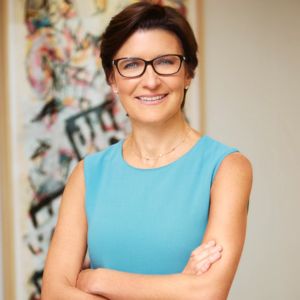
When Jane Fraser was named Citi’s chief executive in February 2021, she became the first woman to run a top Wall Street bank – a symbolic breakthrough and a major feat. She took over a multi-billion dollar behemoth, in 160 countries, that had been shouldering the weight of a decade of regulation and whose approach needed a fundamental recalibration.
Fraser announced a radical strategic reset, exiting consumer banking businesses in more than a dozen countries to focus the bank’s resources on its institutional and wealth management core, and embarked on one of the most ambitious internal transformations in US banking history. The program has been a bumpy ride and not always widely embraced, but it is one kind of strategic clarity–a fearlessness in setting clear market boundaries as well as development objectives that marks out a true long-term thinker from a deft executive merely playing to the next quarter’s pulse. She has set a new standard of ambition in the top ranks of international finance.
3. Mary Barra — CEO, General Motors

Mary Barra has been at the helm of General Motors since 2014, making her one of the longest-serving CEOs of a global automaker and one of the few women to lead one. What’s unique is not how long she’s been at the helm (six years now) but how far the company has come from a combustion engine legacy carmaker to one that is transitioning to mastery of EVs, autonomous driving and software-defined transportation.
Barra’s blueprint for an all-electric future, reflected in aggressive EV product introduction plans, massive investment into battery capacity via the Ultrium platform, and the expansion of the Cruise autonomous vehicle division, represents a bet on a shift that carries real execution risk and faces ferocious competition from Tesla and a re-born global industry. Her decision to take this bet, and to maintain strategic faith in the face of the inevitable challenges of a major platform shift, makes her one of the defining industrial leaders of her time. Barra has been a change agent from the top in an industry that has been slow to change its own beliefs.
4. Emma Walmsley — CEO, GSK
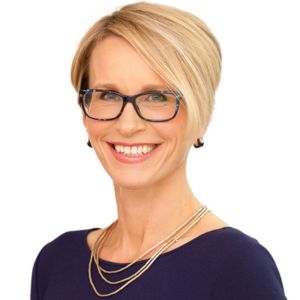
The leadership of GSK the British pharma giant by Emma Walmsley has been all about tough, high-pressure choices that expose a leader’s true personality. In 2017 Emma, took over the reigns of world’s leading global pharma by becoming the first female to ever be CEO has distinguished herself through strategic clarity the company presumably lacked for years.
Her most significant achievement has been to spin out GSK’s consumer healthcare division into a separate companiable, now among the world’s largest consumer healthcare businesses in 2022. The demerger gave GSK the strategic clarity it lacked sharpening focus on pharmaceutical that produce a durable revenue flow, like vaccines, at precisely the point in time when the pipeline investment needed to stay ahead in biopharma was gathering pace. Roche has, under Walmsley’s stewardship, built new late-stage pipeline and is back on a path of real growth while navigating the scientific and regulatory complexity of running a company at the forefront of vaccine science. She proves that patience need not be strategic, nor operational demand and discipline mutually exclusive.
5. Julie Sweet — CEO, Accenture
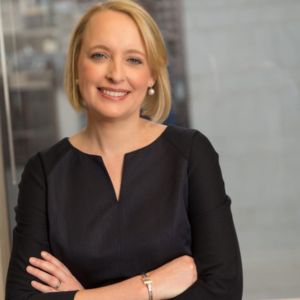
Julie Sweet, Chairman and CEO of Accenture, one of the largest global professional services firms, at a time when tech and business transformation are more intertwined than ever.
And a key part of Sweet’s superiority is her skill in translating that complex technology disruption into actionable business strategy a skill that’s delivered by the hundreds of thousands of Accenture consultants she commands to clients in every industry and every part of the globe. Through the course of Sweet’s leadership, Accenture has driven a persistent investment in new AI capabilities, digital skills, and industry-specific practices that has enabled it to remain an innovator in a consulting marketplace being transformed by the very technology it’s advising on.
6. Carol Tomé — CEO, UPS

Carol Tom became UPS’ CEO in June 2020 – at a time that might be considered the most challenging operation in the history of any logistics provider. When the COVID-19 pandemic had triggered a perfect storm on e-commerce volumes and the supply chain was under unprecedented strains, she unveiled a strategy termed “Better Not Bigger”, where she stresses margin quality, dollars per delivery and optimizing efficiency over volume growth for its own sake.
Its success was all the more remarkable since the company was operating in an industry where scale was king, and showed the strategic independence that can characterize a leader who feels big enough, good enough and brave enough to question the conventions of the industry. Former Home Depot CFO, Tom had worked in the business for more than 20 years before taking over the helm at UPS and her financial acumen and long-term perspective have transformed UPS s approach to creating value. Her time at UPS is a textbook example of how powerful clarity can begetting a business s purpose clearly in mind and sticking to it.
7. Abigail Johnson — CEO, Fidelity Investments

Fidelity Investments’ Abigail Johnson runs the privately held financial services behemoth that manages trillions of dollars of investors’ money representing tens of millions of clients. Appointed as President and CEO in 2014, she became the third generation of the Johnson family to lead the business an inevitable lineage that could as easily have resulted in a custodian rather than an innovator. Johnson has firmly established herself as the latter.
During her tenure, Fidelity has ridden through the industry’s direct revolution. Everything from passive investing to zero cost brokerages; from the advent of cryptocurrencies to treat them like any other asset class. Bringing the firm into the new digital age from the early days with the launch of the Fidelity Digital Assets platform, to the eventual approval of a Fidelity spot Bitcoin ETF-the firm was ahead of most of its rivals on one of the most profound structural changes in investing industry. Johnson embodies the best of long-term private ownership and significant strategic ambition.
8. Reshma Saujani — Founder, Girls Who Code

Reshma Saujani: Not every visionary entrepreneur is evaluated by the firm he or she builds up or the market cap created. Some visionaries are measured in a different currency: hundreds of thousand of girls having learned to program thanks to Reshma Saujani, the founder of Girls Who Code, a not-for-profit organization founded in 2012 directly in an effort to bridge the gender gaps in the tech industry.
That discrepancy is significant women are underrepresented in technology employment worldwide, with the number of women entering computer science declining even as the field’s economic value increased. Girls Who Code directly fights against that trend through additional programming for girls into middle and high school, summer immersion experiences, and college programs to bring a wider range of young women into the field of computing. Her larger push for girls to “fail up” has already impacted the culture of the technology field beyond the scope of Girls Who Code. She is creating the human capital that will build the future.
9. Safra Catz — Executive, Oracle

Safra Catz has quietly played an outsized role in enterprise tech over more than 20 years. As Oracle’s long-standing CEO before moving into her current role as Executive Vice Chair, she sat at the helm of the company’s transformation from a database software business to one of the world’s leading cloud infrastructure providers a move many industry-watchers argued was impossible for Oracle. Her oversight of Oracle’s balance sheet, acquisitions, and investment in cloud infrastructure have helped Oracle Cloud Infrastructure emerge as one of the key winners from the boom in AI infrastructure demand, where Oracle Cloud Infrastructure’s core AI lab partnerships are fueling what is fast becoming one of the most capital-intensive waves in tech history.
Yes, Catz’s impact has reached far beyond Oracle’s number. Her financial expertise, operational diligence and strategic courage have set a standard of executive leadership that has challenged the limits of the enterprise technology industry in the face of formidable competition.
10. Sol Rashidi — Chief AI Officer and AI Strategist

Sol Rashidi is one of the new breed of leaders that only emerged just ten years ago and one of the most influential today the Chief AI Officer. Through human-centric thinking, Rashidi is leading the way in transforming enterprise AI focused on transparency, integrity, and amplifying workforces rather than automation.
Her work confronts one of the most urgent questions facing any organization deploying AI at scale, not what AI is capable of and is doing, but what it must do and how to build the governance, cultural and strategic foundations that will ensure its delivery creates value and impact, not harm. She is a strategist, author, and executive who has driven the AI transformation for some of the world’s largest institutions, bringing both technical credentials and a human perspective to an area that so badly needs both. In a world of capability announcements and competition comparisons, her call to keep people at the center of an increasingly technocratic is a strategic act, not a soft appeal.
The Larger Picture
The ten leaders featured here may come from different industries, different countries, different backgrounds, and have different career paths. They share one thing in common. True leadership in any age is when you have a vision, you have disciplined execution and you are ready to take important decisions when you are faced with uncertainty.
They’re not shaping the future as a unintended side effect of managing their companies. They’re shaping it with an intentionality and a passion of mind that makes the scale of their influence greater than any individual company, product, or market. ‘Philosophically, they are overturning the traditional model of economic projection and establishing a new one what we call holistic projection.